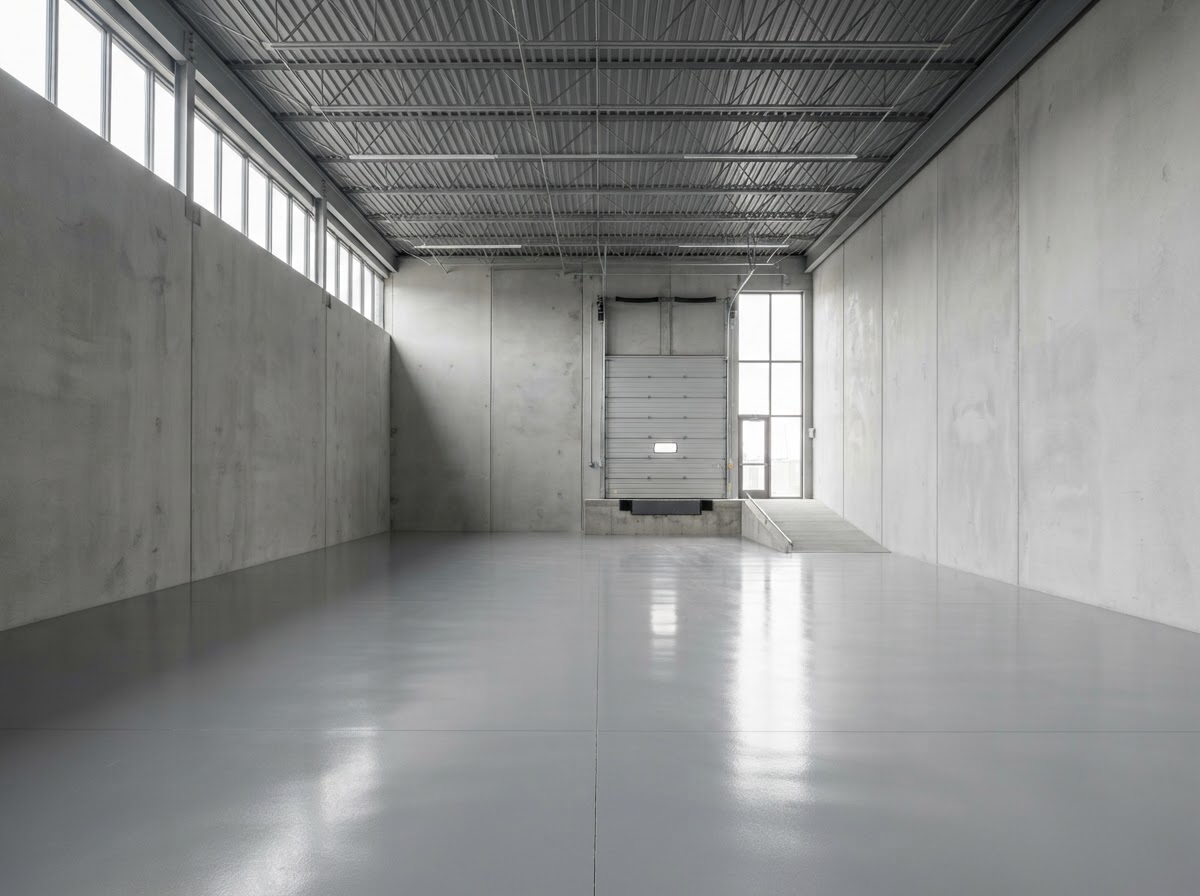
Auto Repair Shops & Garages in Columbus, Ohio
Auto Repair Shops & Garages Epoxy Flooring in Columbus, Ohio
Oil- and solvent-resistant shop floors that clean up fast and take heavy lifts without gouging.
The floor problems auto repair shops & garages owners face
Motor oil, transmission fluid, and brake cleaner soak into bare concrete and stain permanently.
Solvents and degreasers strip and weaken standard floor coatings.
Hot tires leave black pickup marks that dull and stain the floor.
Heavy lifts and jacks gouge and crack thin or poorly prepped coatings.
Oil and fluid spills create slip and fall risks for technicians.
Dull, stained floors look unprofessional to customers in the waiting area.
The system we recommend and why
Chemical-resistant epoxy with polyurea topcoat
Auto repair bays need a floor that resists oil, solvents, and hot tires and takes the abuse from lifts and jacks. A chemical-resistant epoxy with a polyurea topcoat does all of that and cleans up in one mop pass instead of soaking into the concrete.
How it goes down
- 1
Diamond grind the slab and remove oil saturation with deep cleaning.
- 2
Repair cracks, spalls, and lift-anchoring areas.
- 3
Apply an oil-tolerant epoxy primer that bonds through residual contamination.
- 4
Apply a high-build chemical-resistant epoxy body coat.
- 5
Finish with a polyurea or polyaspartic topcoat for hot-tire and solvent resistance.
- 6
Add anti-slip texture in wet or spill-prone bays.
Cure time
Body coat cures overnight; topcoat is walk-ready in 8-12 hours.
Return to service
Foot traffic in 24 hours, vehicle and lift traffic in 48 hours.
What to ask any auto repair shops & garages floor installer
Use this checklist on every quote. The right installer answers these clearly; the wrong ones dodge them.
Does your system resist oil, brake cleaner, and the solvents we use?
Does the topcoat resist hot-tire pickup?
How do you handle oil-saturated concrete before coating?
Can the floor take heavy lifts and jacks without gouging?
Can you add anti-slip texture in spill-prone bays?
How fast can the bays be back in service?
When epoxy is the wrong choice
A basic DIY-style epoxy kit is the wrong choice in an auto repair shop. It will stain, lift from oil saturation, and show hot-tire pickup within months. It is not built for solvents or heavy lifts.
The better alternative: A chemical-resistant epoxy with a polyurea topcoat is the correct system. For shops with heavy chemical or steam cleaning, urethane cement in the wash bays is the better long-term choice.
How we keep your operation running
Shops cannot close all bays at once, so we work one or two bays at a time and schedule nights and weekends. Fast-cure topcoats return a bay to service in 24 to 48 hours. We sequence the work so you keep taking vehicles and your lifts stay in use.
What it costs in Columbus
Auto repair shop floors in Columbus typically run $5 to $9 per square foot installed. Chemical-resistant systems and anti-slip texture add cost. These are estimates — your real price depends on the slab, the oil contamination, and the system.
What moves the price
Square footage and number of bays.
Slab condition — oil saturation and old coatings add prep.
System type — chemical-resistant epoxy costs more than basic epoxy.
Schedule — nights, weekends, or tight timelines.
These are estimates only. A real price comes after a free on-site walk-through.
Auto Repair Shops & Garages epoxy flooring — your questions
Related industries
Auto Dealerships & Showrooms
Showroom-gloss floors that resist hot-tire pickup
Learn more →Manufacturing Plants
Chemical and impact resistance for 24/7 production
Learn more →Related floor systems
Chemical-Resistant Epoxy Coatings
Chemical-resistant epoxy for plants, labs, and repair bays. Withstands acids, solvents, oils, and harsh cleaning.
Learn more →Polyaspartic Floor Coatings
Fast-cure polyaspartic coatings that return floors to service in hours, not days. UV-stable and great for showrooms.
Learn more →Anti-Slip Epoxy Flooring
Textured, anti-slip epoxy for wet areas, ramps, and loading docks. Reduces slip risk where it matters most.
Learn more →Where we serve auto repair shops & garages in Central Ohio
City-specific auto repair shops & garages epoxy flooring pages, each with the problems, systems and scheduling that matter for that area.